
Every sourcing relationship has a moment of truth, and in precision machining it is the payment. A quote is a promise, a brochure is a hope, and a DFM response is an opinion, but the transfer of money is where the buyer's leverage and the supplier's attention converge. The buyers who source precision parts successfully from overseas do not pay on hope; they structure every payment to arrive after an evidence gate, so the money always follows the verification rather than leading it.
What should you verify about the supplier before the first payment?
The first verification is the entity. Ask for the registered company name and its registration or business license number, then verify it independently against the public registry. Check that the registered business scope includes machining or manufacturing, because a scope reading "import and export" describes a trader, not a precision floor. Check that the registry address matches the workshop address you are given, and confirm that the entity issuing the commercial invoice and packing list is the same entity that owns the machines and the CMM, so the money you transfer lands with the company that will actually make and measure your part.
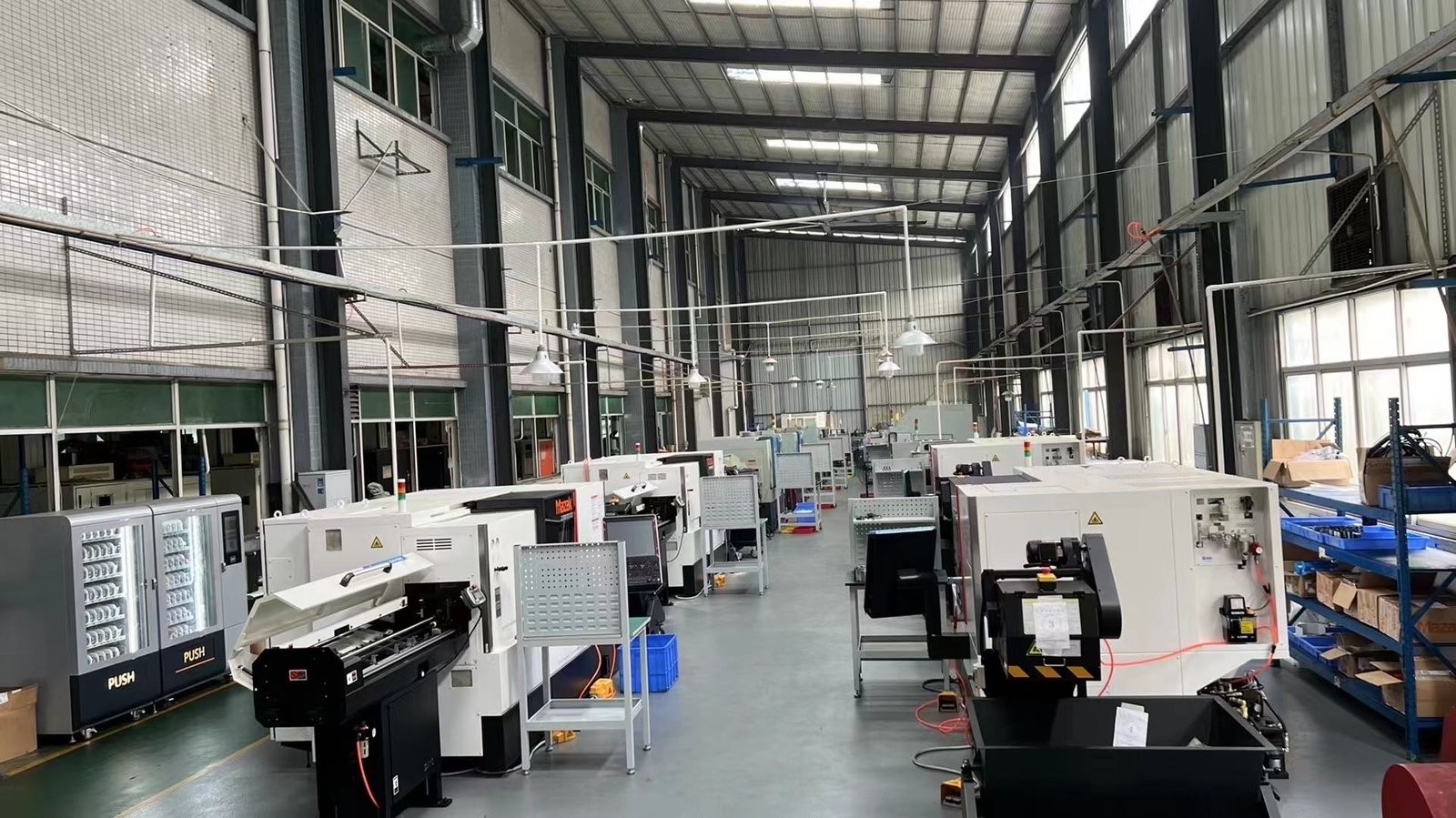
The second verification is the floor. Ask for the machine list and the inspection instruments together, because on a precision part the two are one story: the machines define what can be cut, and the CMMs and surface instruments define what can be proven. Ask for a sample inspection report from a shipped job and a sample material certificate, and read them the way your quality file will read them later. A supplier that produces evidence in writing has priced its real capability; one that offers only a brochure has priced a hope. The factory page of this site is the kind of floor story to compare against.
Which certificates should be read before the money moves?
Read the supplier's quality documentation the way an auditor would, before the first transfer. ISO 9001:2015 is the baseline; IATF 16949:2016 (product design excluded) and ISO 14001:2015 are additional signals of documentation and process discipline — the factory behind this site holds all three. What matters more than the certificate name is the scope page: a scope that names machining processes at this location is evidence, while a scope covering unrelated activity is decoration. Ask to see the certificates, not a mention of them, and check that the entity on the certificate is the entity you are paying.
On a precision part, the certificate story extends to the instruments and the material. Ask whether the measurement equipment is calibrated on a schedule, because an uncalibrated CMM is a very expensive way to be wrong with confidence. Ask how incoming material is verified against its certificate before the stock reaches a machine, because a substituted alloy passes every dimension and fails in service. And ask how the lot is recorded — the heat number, the machine, the program revision, the operator, the inspection results — because the lot record is the chain that protects you later, and it is built as the parts are made or it is not built at all. The record-retention question belongs in the same pass: ask how long the supplier keeps certificates, reports, and lot records, because an aerospace or medical audit reaches back years, and the chain that was not retained is the chain that does not exist.
The calibration trail is worth a specific question, because the tolerance story stands on it. Ask when the CMM and the surface instruments were last calibrated and what the calibration certificates show, because a measurement claim made on an instrument that has drifted is a claim about the past, not about your part. A supplier that answers with the dates and the certificates is treating its measurement as evidence; one that answers vaguely is treating it as decoration.
How does the DFM response protect the first payment?
The DFM review happens before the first payment, and it is part of the verification because it tells you how the supplier thinks about your part. A precision supplier that reads your drawing as an engineer will ask questions back about datums, critical features, and material verification, and will flag the features where the tolerance is costing money, the finish that forces an extra operation, and the thin wall that will move as the metal releases stress. That review is free engineering and the strongest predictor of how the order will be treated after it is paid for.
When a supplier returns only a number with no questions, it is telling you how it quotes; when it returns questions and process comments, it is telling you how it will manufacture. The DFM response also tells you whether the supplier is honest about its own measurement: a serious precision shop will name the features it will put on the CMM, the instruments that verify the finishes, and how the first article will be reported — before you ask. A response that does that is a response you can pay a deposit against; a response that does not is a reason to hold the money and ask again.
How should payment be structured on a precision order?
The payment structure is the schedule of gates, and it should be tied to evidence rather than to calendar. A deposit to cover material is normal and reasonable on machined work — the supplier must buy stock, and asking it to carry the full material cost is not realistic. What follows the deposit is where the structure matters: the production balance should be tied to first article approval, the inspection evidence, and the pre-shipment confirmation, so that no large transfer moves before the part has been measured and reviewed against the drawing.
Ask for the payment milestones in writing before the order, and read the structure like a diagnostic. Milestones tied to first article approval and inspection are the signature of a supplier that expects its work to be checked; pressure to pay most of the order before any evidence exists is the signature of one that does not. On a large order, consider a third-party inspection before the balance of payment, and tie the final payment to the pre-shipment confirmation that the parts, the reports, and the documents are ready to move, because the supplier that has been paid in full before shipping has no remaining reason to hurry the border crossing.
What does a first article gate verify before the production balance?
The first article is the gate between the deposit and the production balance, and it should be run as a formal approval rather than a formality. Place a small order first and treat it as the qualification event: review the inspection report against the drawing the day it arrives, with the tight features carrying CMM or profilometer data and the instrument named. Check the material certificate against the grade and condition on the drawing and confirm the heat number matches the delivered stock. Ask for photographs of the actual part or a video call where it is pointed at on the bench, and confirm the finish values against the callouts.
Where a program spans several part numbers, batch the first articles into a single gate and approve them together, so you review the whole drawing family against the process in one pass and catch the cross-part issues that individual approvals miss. And state in the PO which events trigger a new first article — a drawing revision, a change of material source, or a change of process — so the gate protects every subsequent order the same way it protects the first. The production balance should not move until the gate has passed; that is the entire point of structuring it as a gate.
Which red flags should stop a payment?
Keep a running tally through every stage, and act on it before each transfer. Disqualifying red flags include: no verifiable registration number, or one that does not check out; a business scope without machining; certificates that cannot be shown or whose scope does not match; a machine or instrument list that does not exist; a tolerance claim with no measurement story; no engineering questions about your drawing; no stated material-verification process; and pressure to pay before any evidence exists. Each flag points to a failure mode that will cost you later, and any one of them is enough to stop the transfer.
Two softer signals belong on the same tally: a supplier that changes its bank details mid-order, and one that moves the agreed terms after the deposit. Both are pressure patterns that appear only after money has started moving, and both are reasons to pause the next milestone until the change is explained in writing. The supplier that keeps its terms and its account stable through the order is the supplier that treats the relationship as a long one.
The closing discipline is to let the evidence, not the urgency, release each payment. A supplier that has shown its entity, its certificates, its machine and instrument lists, and a sample report has earned the deposit; a supplier that returns a first article with honest numbers has earned the production balance; a supplier that presents the parts, the reports, and the documents together has earned the final payment. Every payment should close a verified step rather than open an unverified one, which is the only payment discipline that survives contact with an overseas precision order.
How do you verify quality before the final payment?
The final payment should follow the pre-shipment confirmation, and the confirmation is a checklist of its own. Confirm the inspection reports cover every critical feature with the instrument named, and cross-check a measured value against your own expectation where the part justifies it. Confirm the material certificate names the grade and condition from your drawing with a heat number that matches the delivered stock. Confirm the lot records tie the parts to their heat and machine, and ask for photographs of the actual parts or a video call where the finished lot is shown on the bench. Where the part is critical or the value is large, a third-party inspection before the final payment is reasonable insurance.
Then confirm the shipment itself: the packing matches the packing list, the documents ship with the parts rather than after them, and the freight booking matches the Incoterm in the PO. A supplier that presents the complete evidence package before the final payment is a supplier that treats the order as an audit; one that asks for the balance with the paperwork still pending is asking you to trust a gap. Keep the verification file with the order — the entity details, the certificate scopes, the first article report, the locked terms — because it is the baseline for every later order and the reference for any dispute that follows.
What is the pre-payment verification workflow, step by step?
Here is the whole workflow as a sequence of gates, each one releasing the next payment.
- Before the deposit — entity and evidence: verify the registered entity and its scope, read the certificates and their scopes, and collect the machine list, instrument list, sample report, and material certificate format. No evidence, no deposit.
- Before production — DFM and terms: send the toleranced drawing, read the engineering questions and process comments, and lock the Incoterm, the documentation package, and the payment milestones in the PO.
- Before the production balance — first article: receive the first article and its inspection report, confirm the material certificate and the lot record, and approve the gate before the balance moves.
- Before the final payment — pre-shipment confirmation: confirm the parts, the reports, the documents, and the packing together, with photographs or a video call, and release the final payment against the confirmation.
Keep the closing rule in front of you: money should always follow evidence, never lead it. On a precision machining order — where the measurement is part of the product and the tolerance claim is only as good as the CMM data behind it — the supplier that verifies everything with you before each payment is the supplier most likely to deliver what it promised after the last one. That is the entire discipline of sourcing precision work: pay for verified steps, and the parts follow.
Frequently Asked Questions
What should I verify before paying a precision machining supplier?
Verify the registered entity and its scope, the quality certificates and their scopes, the machine and inspection instrument lists, a sample inspection report from a shipped job, the DFM response on your drawing, the first article gate, and the payment milestones. Money should move only when evidence has already moved.
How should payment be structured on a precision machining order?
A deposit to cover material with the balance tied to milestones — first article approval, inspection evidence, and pre-shipment confirmation — is the normal structure. Pressure to pay most of the order before any evidence exists is a signal worth acting on, not a term to accept.
What evidence should a supplier show before the first payment?
The machine and instrument lists, a sample CMM or inspection report from a completed job, the material verification process, and the tolerance bands it states — for example ±0.003 mm milling and turning, ±0.002 mm grinding, Ppk ≥ 1.67 at the initial study on critical characteristics and Cpk ≥ 1.33 on general characteristics. Capability is reported per characteristic: every report names the feature, its tolerance band, the sample size, the sigma method, and the study window.
What does a first article gate verify before the balance is paid?
Everything the drawing demands: each critical feature measured on the right instrument with the result reported, the material certificate tied to the lot, and the lot record connecting the part to its heat and machine. Approve the gate before the production balance moves.
Which red flags should stop a payment?
No verifiable entity or a scope without machining, certificates that cannot be shown, a tolerance claim with no measurement story, no engineering questions about your drawing, no material verification process, and pressure to pay before evidence exists. Any one is enough to stop the transfer.
How do I verify quality on a precision part before the final payment?
Require the inspection report against the drawing — tight features should carry CMM or profilometer data with the instrument named — check the material certificate, review photographs or a video call on the actual part, and tie the final payment to pre-shipment confirmation.
Ready to source precision work on verified terms?
Send the drawing and your sourcing questions through the contact page — the response will include the entity details, certificates, machine and instrument lists, and a milestone-structured first article offer, all checkable in writing before any payment.